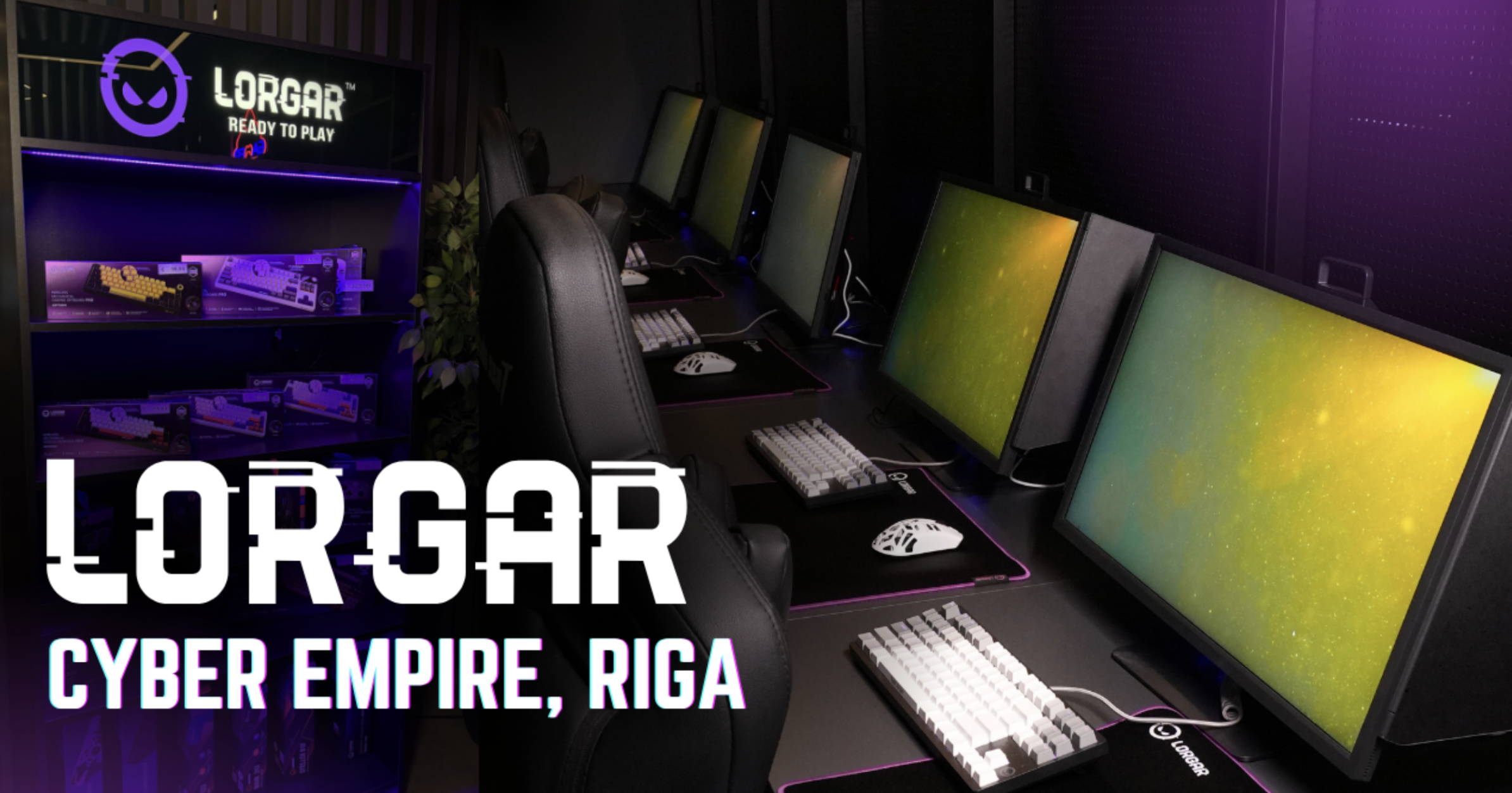
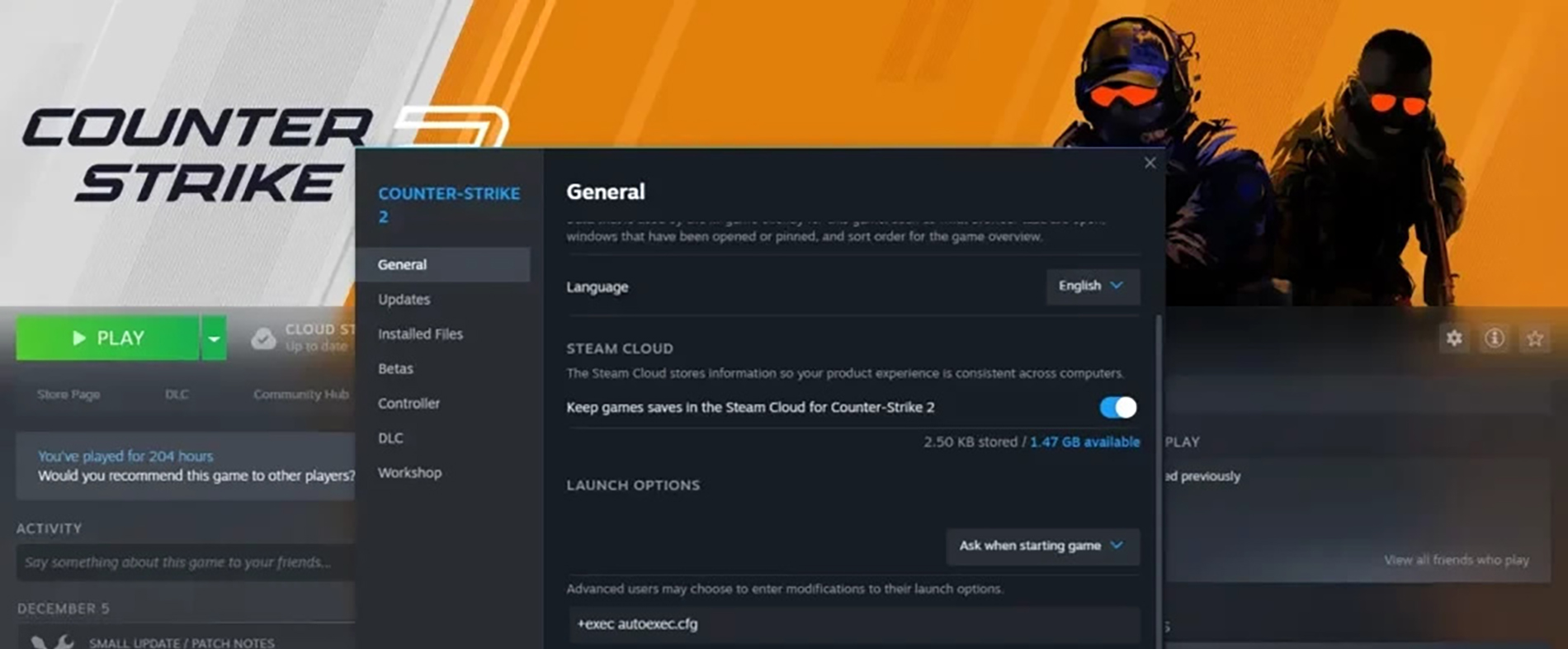
Usual mousepad conversation comes down to a single choice: speed or control. A speed pad let the mouse slide fast across the surface. A control pad added friction so the cursor stopped where you wanted it. That distinction still exists in product catalogs, but it’s no longer where the interesting differences live. What to look for in a mouse pad today comes down to size, fibre type, thickness, edge construction, base compound, and how a pad holds up after six months of daily use. This gaming mousepad buying guide walks through each of those choices and shows where the current LORGAR lineup fits.
Size
Size is the decision that matters first. A pad that’s too small forces you to lift the mouse repeatedly during a game, which breaks aim and tires out the wrist. A pad that’s too large eats the desk space you wanted for other things. Picking the right size is mostly a function of two things: your in-game DPI and how much arm movement your aim relies on.
Low DPI players (400 to 800) move the mouse across long distances to turn the camera. That means more pad surface. High DPI players (1600+) turn with small flicks and need less room. Arm aimers, who lock the wrist and move from the elbow or shoulder, need more space than wrist aimers regardless of DPI.
The standard sizes are medium (around 360×300 mm), large (around 450 to 500 mm wide) and extra-large or even XXL (from 800×300 to 900×400 mm).
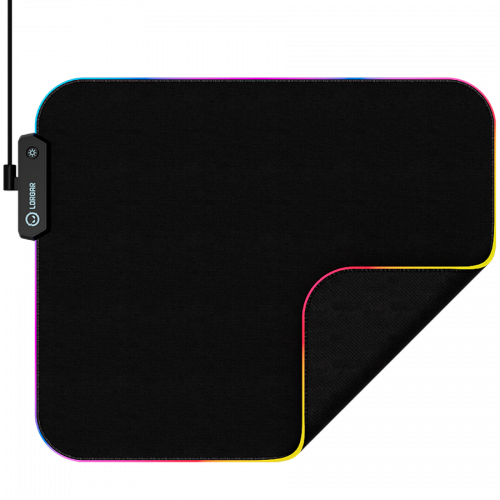
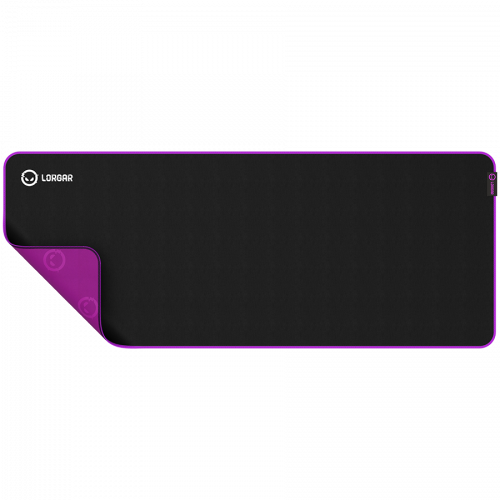
| Medium | Large | XXL |
 |
 |
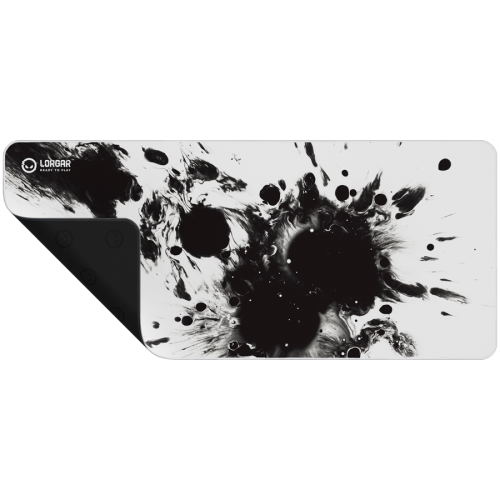 |
| Elite Steller 913 | Advanced Main 319 | Advanced MPA14XL |
Anything smaller than medium is usually reserved for laptop users on-the-go. Medium suits high-DPI players and tight desks. Large is the general-purpose answer for most players. Extra-large covers the area under the keyboard as well. This helps with keyboard sound a lot plus creates a unified setup feel for the whole desk.
| Size Category | Dimensions | Recommended For | Models |
|---|---|---|---|
| Medium | 360 × 300 × 3 mm | High-DPI players, compact desks | Main 133, Main 313, Main 323, Legacer 753, Steller 913 |
| Large | 500 × 420 × 3 mm | Most gamers | Main 135, Main 315, Main 319, Main 325, Legacer 755 |
| XXL | 900 × 360 × 3 mm | Keyboard + mouse setups | Main 139, Main 329, Steller 919 |
| XXL Wide | 900 × 400 × 3 mm | Maximum desk coverage | MPA14XL, MPA15XL |
LORGAR’s lineup covers medium, large, and extra-large sizes. The Main 313, Steller 913, and Legacer 753 sit at the medium size (360×300×3 mm). The Main 315, Main 325, Main 135, and Legacer 755 are large (500×420×3 mm). The Main 139, Steller 919, and MPA14XL are extra-large, with the Main 139 and Steller 919 both measuring 900×360 mm and the MPA14XL at 900×400 mm. If you don’t know which to pick, large is the safe default for general gaming.
Surface
The oldest question in the category is mouse pad control vs speed. A speed surface uses a smooth, low-friction weave, so the mouse glides freely and slows only when you slow it down. A control surface uses a coarser texture that resists motion, so you can stop precisely without overshoot. Twenty years ago you picked one or the other based on whether you played fast shooters or slower precision games.
The word “cloth” hides far more variety than it lets on. The weave pattern, the yarn, how tightly the fabric is knit, and any surface coating combine to set the two things that actually decide how a pad behaves: how much force it takes to start the mouse moving, and how steady the friction stays across the whole pad, from the centre to the edge. Two pads can both be cloth, both be high-speed, and still feel nothing alike.
Multispandex is the standard gaming cloth and balances glide against durability. Nylon, woven more tightly, gives a faster glide and tends to last longer. Thermoplastic fibres with a textured profile sit at the slow, high-grip end for players who want maximum control. Polyester is cheaper and turns up in entry-level pads and office mats.
LORGAR’s lineup spreads across that range. The Main 313, 315, and 139 use a multispandex high-speed surface – the common all-rounder. The Main 323, 325 and 329 are the control pads in the family: ultra-resistant thermoplastic fibres give it a low-glide, high-traction surface. The Legacer series (753, 755) uses a tighter nylon weave with what LORGAR proudly calls an ultra-gliding surface – very fast and built for longevity. The Steller series (913, 919) also runs high-speed surfaces.
| Surface Family | Models | Material | Feel | Best For |
|---|---|---|---|---|
| Main High-Speed | Main 133, Main 135, Main 139, Main 313, Main 315, Main 319 | Multispandex | Fast, balanced glide | Everyday gaming, mixed genres |
| Main Control | Main 323, Main 325, Main 329 | Thermoplastic fibres | High control, low glide | Tactical FPS, MOBA, RTS |
| Legacer Ultra-Glide | Legacer 753, Legacer 755 | Nylon | Very fast glide | Competitive FPS and fast-paced games |
| Steller RGB High-Speed | Steller 913, Steller 919 | High-speed cloth | Fast glide | RGB setups and general gaming |
| Advanced Series | MPA14XL, MPA15XL | Low-resistance fibre blend | Fast glide | XXL desk setups and all-purpose gaming |
Surface Quick Guide
| If you want… | Choose |
|---|---|
| Balanced speed and versatility | Main High-Speed |
| Maximum stopping power | Main Control |
| Fastest glide | Legacer |
| RGB lighting | Steller |
| XXL desk mat | MPA14XL / MPA15XL |
Hard pads
Cloth covers most of the market, but plenty of other mouse pad types exist. Plastic pads, and even glass pads (tempered glass with a textured top), aluminium or zinc-alloy pads, and rigid plastic pads all produce a faster and more consistent glide than even the fastest cloth surface. The trade-off is feel and longevity. Hard pads have no give under the wrist, produce more noise as the mouse skates scrape across them, and wear down mouse skates faster than cloth does. They’re popular among pro shooter players who prioritise raw glide consistency above everything else. Mousepad speed control debate is strong here too, and some plastic models even propose two dedicated surfaces to cover both.
Cloth pads, including every model in the LORGAR lineup, balance glide speed with wrist comfort, quieter use, and longer skate life. The cloth-versus-hard split is a different decision from speed-versus-control: a cloth pad can be tuned for speed (like the Legacer series) without being a hard pad, and a hard pad isn’t automatically faster than the cloth surface.
Surface vs mouse
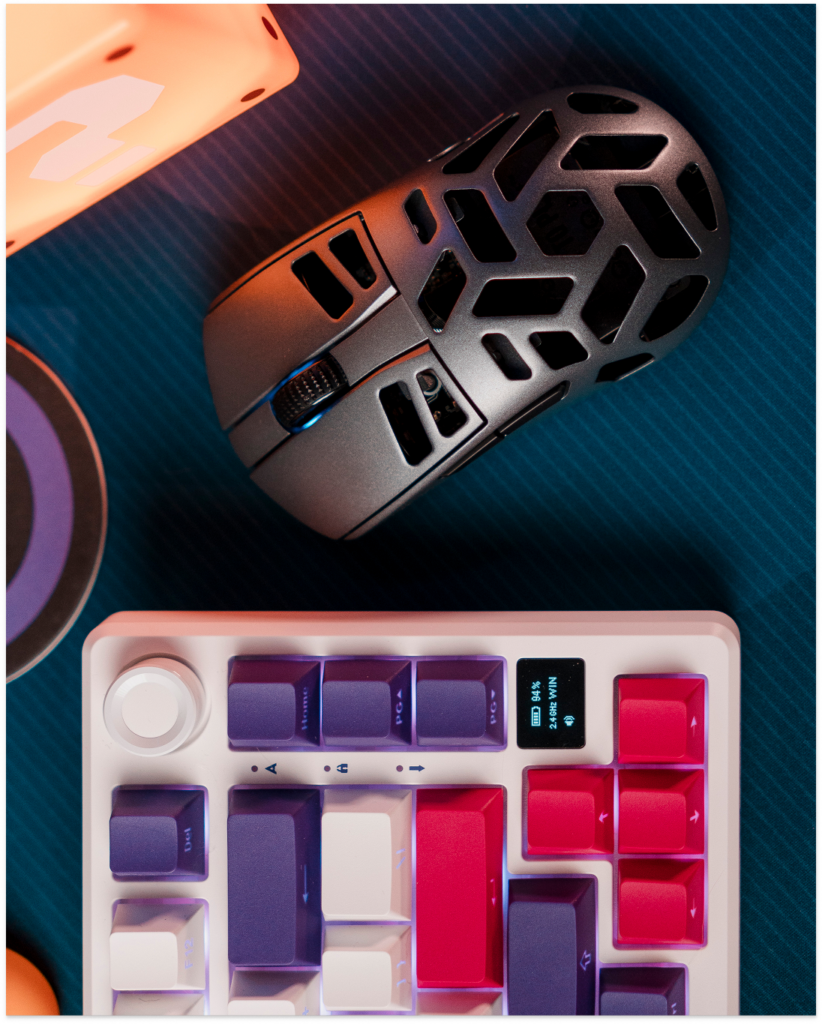
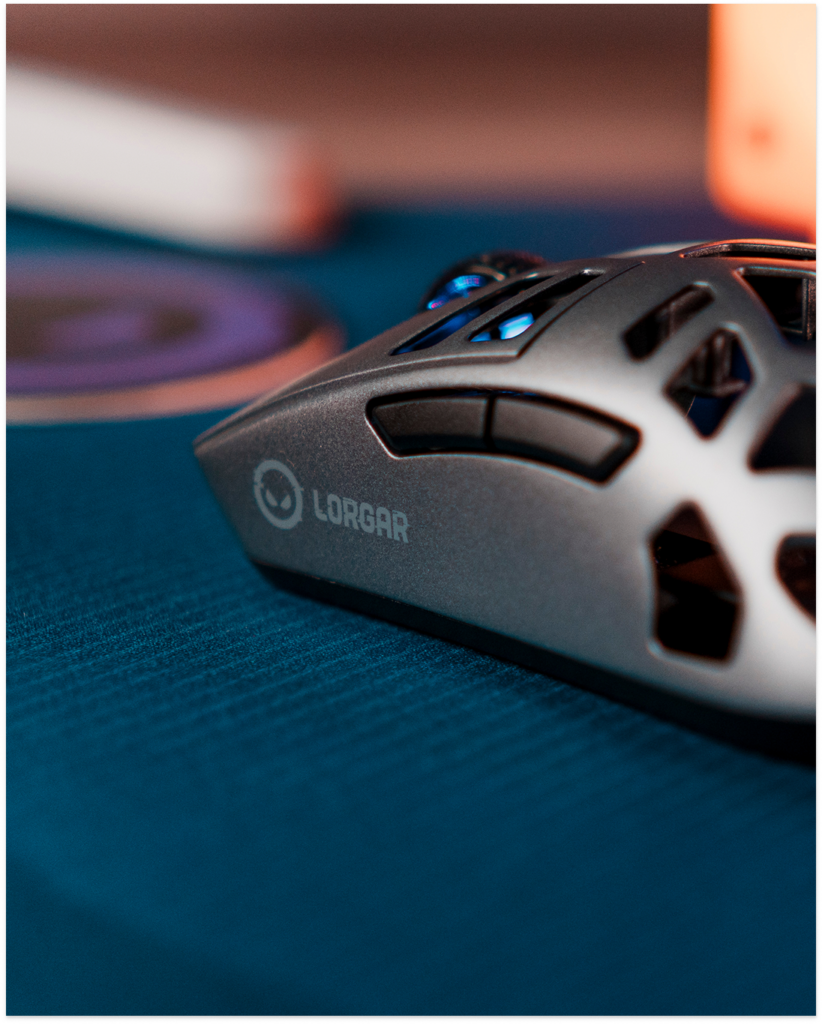
The other variable is the mouse itself. A pad doesn’t work in isolation. The skates on the bottom of the mouse contact the surface directly, and the same pad will feel different under different skates. 100% PTFE skates are the default on most modern gaming mice and pair predictably with cloth pads across the speed spectrum. Ceramic-blend or glass skates glide faster on cloth than pure PTFE but wear cloth pads down quicker during heavy use. If you’re running a LORGAR mouse on a LORGAR pad, the combination is tuned to work together: the MSA10, MSA10W, MSP80, and MSE90W all use 100% PTFE skates, which behave consistently across the multispandex, nylon, and thermoplastic surfaces in the pad lineup.
 |
 |
Thickness
Thickness gets less attention than size, and it changes two things: how portable the pad is, and how it feels under your wrist.
At the thin end, around 1 mm, a pad rolls up small enough to drop into a laptop bag, and it lies flat enough to fit between the screen and keyboard when the lid is closed – effectively doubling its duty as a protector. The trade-off is comfort. There is almost nothing between your wrist and the desk, so a hard or cold surface comes straight through.
Most gaming cloth pads land at 3 to 4 mm. That adds enough material to soften the contact under the wrist and take the edge off the fatigue that builds over a long session on a hard desk. This is where LORGAR’s cloth pads sit, at 3 mm. At this point, the pad starts to work as a cushion: the foam absorbs an uneven or slightly textured desk underneath, so the surface you feel is the pad rather than the table. The cost is a slightly floaty feel for some players.
For most setups, 3 to 4 mm is the optimal choice. Go thinner only if portability drives the decision.
Edges
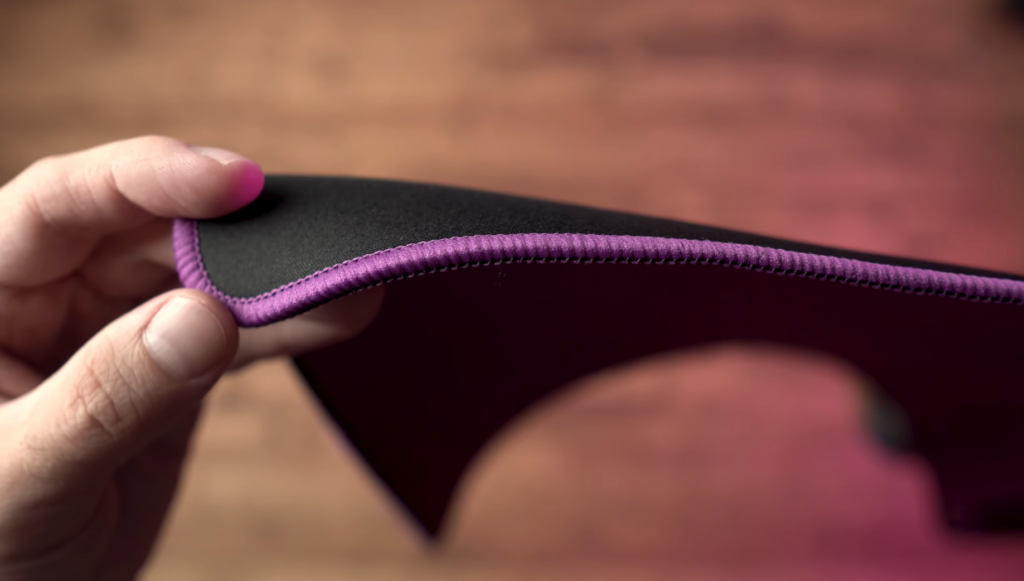
Stitched edges have a thread border sewn around the pad’s outer rim, which stops the cloth fraying when it catches on a wrist or a sleeve. That fraying is the main way cheaper pads fail. The cost is a small raised lip at the edge, which some players dislike under the wrist. The thread is effectively a third element added to the cloth pad in addition to the surface and the base and that adds complexity to the question of how to choose a gaming mousepad.
 |
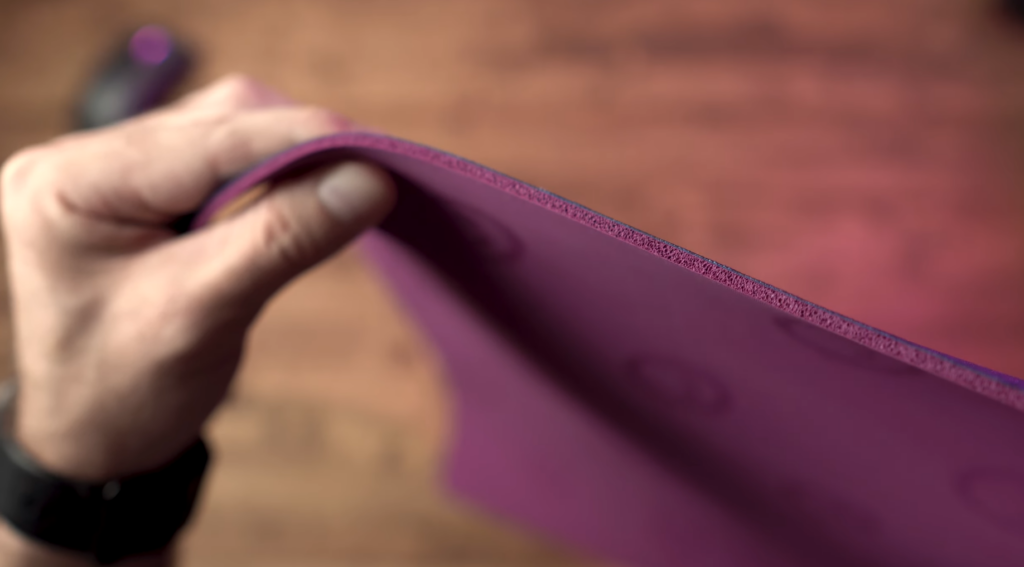 |
Trimmed edges, sometimes called heat-sealed or cut edges, sit flush with the surface. They feel smoother under the wrist, because there is no lip to cross. On a 3 to 4 mm pad there is a second, quieter benefit: the cut edge gives a little when you rest weight on it, so you get a soft boundary instead of a hard ridge. The trade-off is longevity, since the edge can fray over time as the surface fibres lift, especially under heavy use. This is why many competitive players run trimmed pads and simply replace them more often: the cleaner feel is worth a shorter life to them.
| If you prefer… | Choose |
|---|---|
| Long-term durability | Double-Stitched Edges |
| Smooth wrist movement | Trimmed Edges |
In the LORGAR lineup, most pads use double-stitched edges: the Main 313, Main 315, Main 329, Main 323, Main 325, Main 329, Legacer 753, Legacer 755, and MPA14XL. The Legacer pads add a second touch to the stitching, with the thread in contrasting white and purple to reinforce wear resistance and give the edge a more deliberate look. The Main 133, Main 135 and Main 139, as well as MPA15XL, use trimmed edges.
| Edge Type | Models | Feel | Main Advantage |
|---|---|---|---|
| Double-Stitched Edges | Main 313, Main 315, Main 323, Main 325, Main 329, Legacer 753, Legacer 755, MPA14XL | Slightly raised edge | Maximum durability and resistance to fraying |
| Trimmed Edges | Main 133, Main 135, Main 139, Main 319, Steller 913, Steller 919, MPA15XL | Flush with the surface | Smoother wrist feel and softer edge contact |
Base
The base does two jobs. The first is grip: it keeps the pad from sliding when you swing the mouse hard. Cheap pads use thin rubber or foam that shifts mid-game. Better pads use a textured anti-slip rubber compound with an embossed pattern that holds the desk. Weight helps too, because a heavier pad has more friction against the desk simply from its mass.
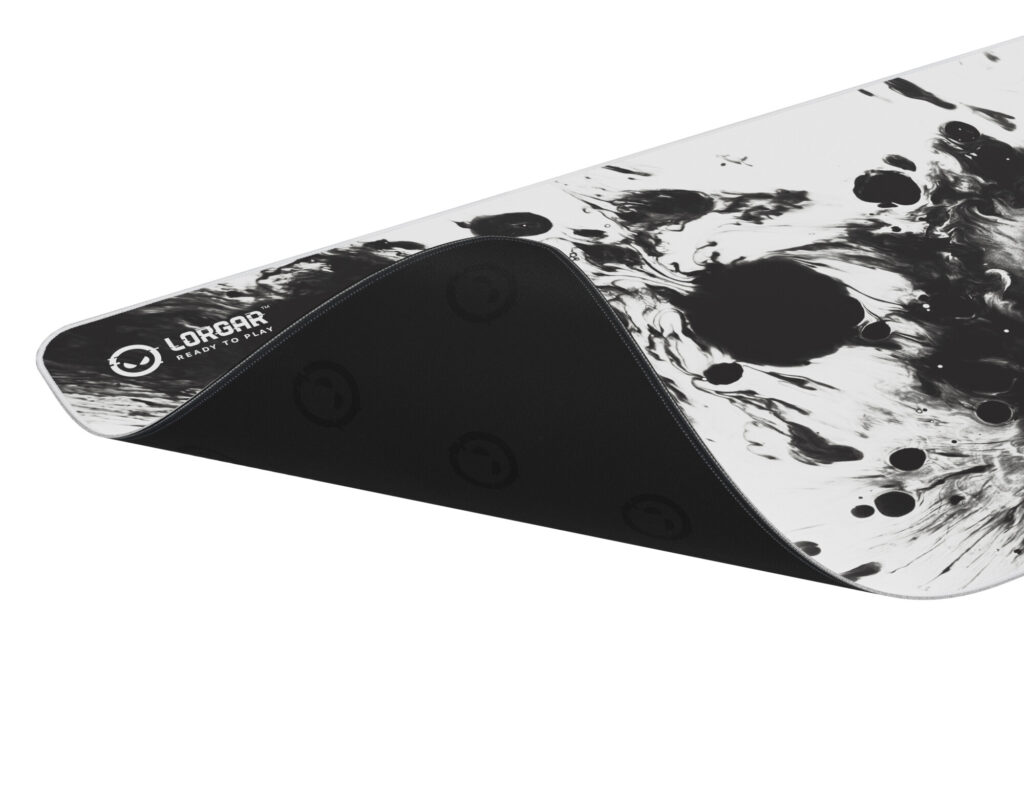
The second job is cushioning, and it gets overlooked. The base is what the surface sits on, so it shapes how the pad feels under the wrist and, more subtly, how the mouse stops. A base with a little spring lets the skates settle for a fraction of a second when you halt, which can make precise stops feel cleaner; a very firm base keeps the glide consistent but feels harder under the hand. Natural rubber grips slightly better than synthetic and stays supple longer before it hardens, but it costs more to produce and shows up less often.
Across the LORGAR lineup the standard is an anti-slip rubber base with the LORGAR logo embossed into the underside. Weight climbs with size and intent, from the Main 313 at 195 g, through the Main 315 and 325 at around 390 to 400 g and the Legacer 755 at 450 g, up to the Steller 919 at 640 g. Heavier is not automatically better (an extra-large pad needs the weight just to stay flat across its area), but within the same size class a heavier pad gives a more planted feel.
Coatings
A cloth pad absorbs sweat, dust, food crumbs, and skin oil over time. After a few months on a daily-use pad, the surface develops dark patches where the wrist rests, the glide becomes uneven, and the smell becomes a problem. Pad longevity is mostly about how well the surface resists this kind of contamination.
Water-resistant and waterproof coatings are the most useful upgrade. A water-resistant coating lets you wipe the pad clean with a damp cloth without the moisture soaking into the fibres. A waterproof coating makes the pad more or less impervious to spilled drinks and easy to wash under a tap. The trade-off is that coated pads can feel slightly slower than uncoated equivalents, because the coating adds a tiny amount of friction.
The LORGAR Legacer 753 and Legacer 755 include a water-resistant coating on its nylon surface, which is one of the differentiators that justifies the premium position in the lineup for the Legacer series.
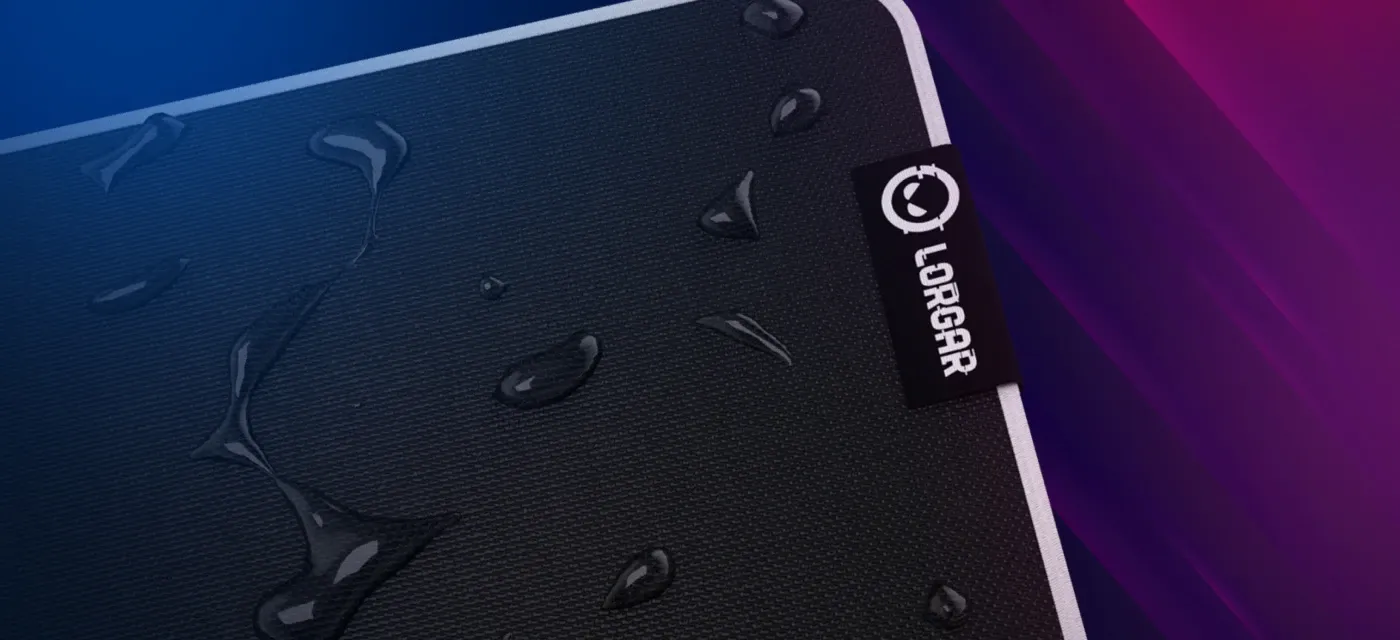
The Main series pads (313, 315, 325, 135, 139) ship without an added coating and rely on the cloth itself for durability. As a small bonus, the Legacer series includes a LORGAR logo that glows in the dark, which is a niche feature but useful if you turn the lights off for late-night sessions.
RGB lighting
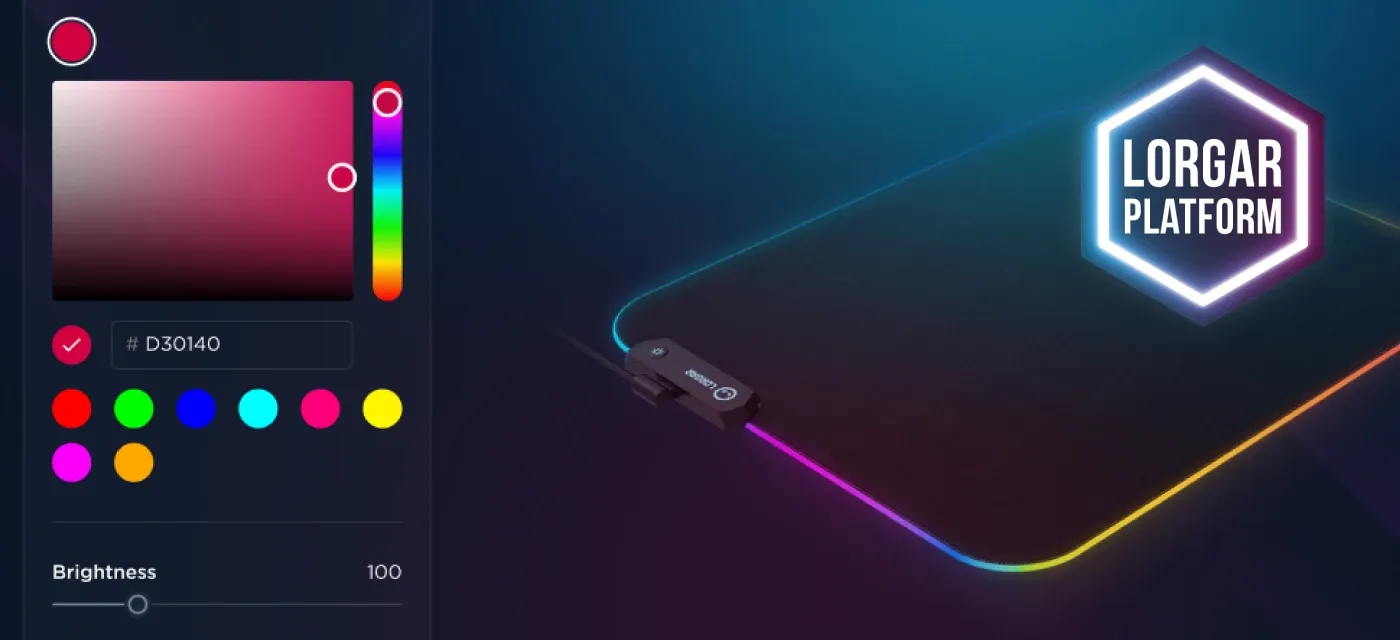
A small but literally bright category of powered pads connect to the PC via USB and add backlighting around the perimeter, sometimes with lighting controllable from software. The functional argument for a powered pad is sync: if every other peripheral in your setup has RGB lighting, an unlit pad becomes the visual gap in the middle of the desk. The aesthetic argument is the obvious one.
The technical considerations on a powered pad are cable management (the USB cable runs off the corner of the pad), software capabilities (whether the lighting can sync with the rest of the setup or only runs preset modes), and power draw (most pads run on USB without needing a separate adapter).
In the LORGAR lineup, the Steller series covers this category. The Steller 913 is the medium-sized RGB pad and the Steller 919 is the extra-large version. Both run USB power with a 2 m braided cable and offer five lighting modes. The lighting syncs with other LORGAR devices through the LORGAR PLATFORM, so the pad can match the colour scheme of a connected LORGAR mouse, keyboard, or headset.
Picking the right pad
Three questions get you to the right mousepad for gamers. First, what size? Medium if your desk is tight or your DPI is high. Large for general use. Extra-large if you want one continuous surface under the keyboard and mouse. Second, what surface feel? Pick high-speed if you play fast-paced shooters or rely on flicks. Pick precision control if you play slower games (tactical FPS, MOBA, RTS) or want to stop on a target without overshoot. Third, what construction priorities matter most: longevity, water resistance, RGB sync, or budget. Or everything.
For the most common gaming use case (large size, high-speed surface, durable construction, no RGB), the LORGAR Main 315 is the straightforward pick. For players who want maximum control, the Main 323/325/329 are the only models in the lineup with the thermoplastic-fibre precision-control surface in 3 different sizes. For players who want premium durability and water resistance, the Legacer 755 is the lineup’s flagship cloth pad. For RGB and ecosystem sync, the Steller 913 (medium) or Steller 919 (extra-large) are the only options. For an extra-large desk mat with the bright design and high-speed surface, the choice is between MPA14XL (double-stitched edges) and MPA15XL (cut edges).
| Model | Best For | Key Feature |
|---|---|---|
| Main 133 | Small desks | Compact high-speed surface |
| Main 135 | Everyday gaming | Large balanced surface |
| Main 139 | Full desk setups | XXL coverage |
| Main 313 | Durable compact setup | Stitched edges |
| Main 315 | Most gamers | Best all-round choice |
| Main 319 | Everyday gaming | Large high-speed surface |
| Main 323 | Tactical FPS | Precision control |
| Main 325 | MOBA / RTS | Control-focused surface |
| Main 329 | XXL precision setup | Control + extra space |
| Legacer 753 | Competitive FPS | Ultra-glide nylon surface |
| Legacer 755 | Premium gaming | Water-resistant coating |
| Steller 913 | RGB setups | RGB lighting |
| Steller 919 | Large RGB setups | XXL RGB surface |
| MPA14XL | Durable desk mat | Double-stitched edge |
| MPA15XL | Comfort-focused desk mat | Smooth trimmed edge |
Whichever size and surface you start with, the quality foundation is the same: all LORGAR pads carry a 24-month warranty and share compatibility with every common mouse sensor.